
BC physicians and VPD partner on trauma-informed workshop
Posted on August 14, 2026
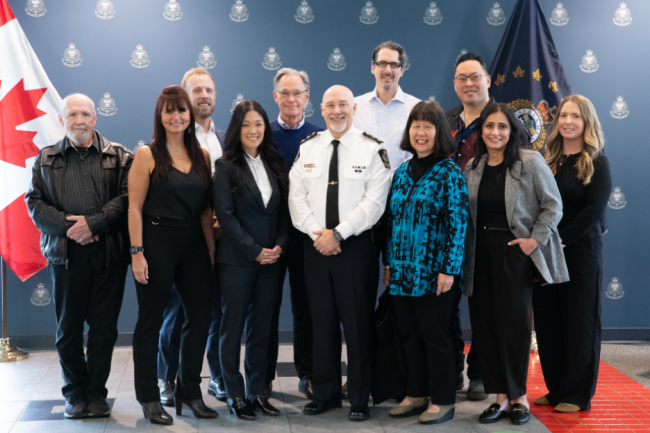
This spring, BC physicians co-led a training session for members of the Vancouver Police Department (VPD) on trauma-informed care and the importance of recognizing the impact of trauma on those they interact with and themselves.
Hosted by Inspector David Ballance, who leads VPD’s Youth Service Section, five physicians and a clinical psychologist from Shared Care’s Child and Youth Mental Health and Substance Use (CYMHSU) Community of Practice spoke to department members about how to recognize trauma and how to help others regulate their emotions in high-stress situations without retraumatizing them.
"Be eager, seek people, and be nice to them."
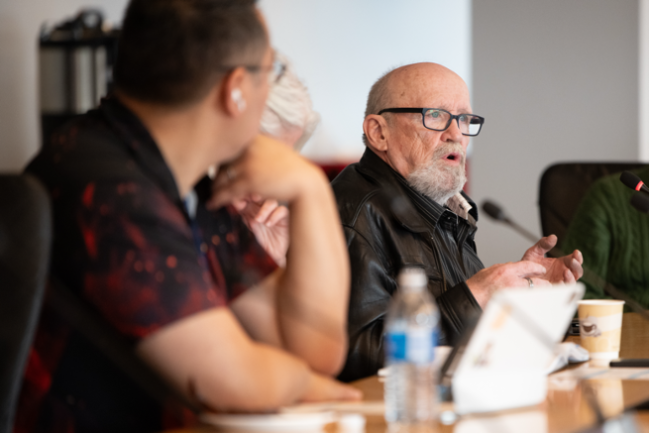
Participants had the opportunity to hear from Richard, who has direct experience of the criminal justice system.
Growing up in Nelson with virtually no family connections, he ended up homeless and later turned to petty crime and substance use. Countless police interactions gave him a chance to see how a conversation with law enforcement could span a wide range of emotions depending on the officer.
“One time, I was sleeping in a doorway when someone started nudging me. A police officer said, ‘Excuse me, sir, but this lady would like to get into her business.’ I complied, and we were both nice about it.”
On the flip side, he recalls a business owner confronting him about dumpster diving. After the owner called the police, the responding officer handled him roughly and told him he was “getting off lucky”.
Now, after 15 years of counselling and support, Richard understands himself better than ever. He praises those friendly police interactions as having made a lasting impact.
“Get to know people as people,” he says. “Be curious about them. You don’t know where they’re from or what they’ve gone through in their lives. I was hard on myself; it was a nice feeling to have others treat me nicer than I did myself.”
Understanding local needs
While the basic skills of law enforcement are similar across cities, the contexts in which officers work can vary greatly.
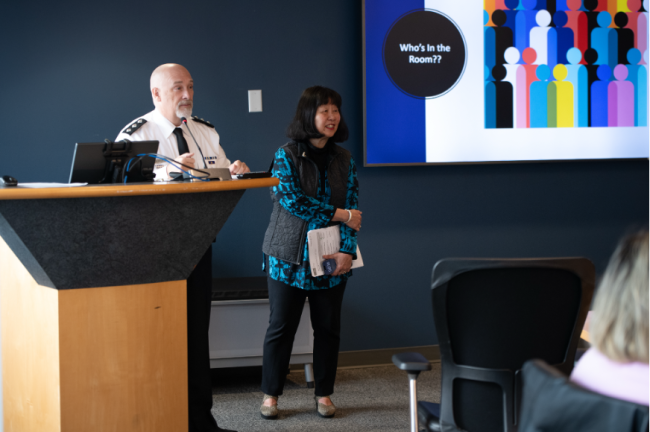
Inspector Ballance and Dr Shirley Sze—a family physician, chair of the Adverse Childhood Experiences working group and co-chair of the CYMHSU CoP steering committee—used call statistics to set the environment in which VPD officers operate.
The numbers show the police investment in ensuring more appropriate treatment. Since VPD added a liaison nurse to their Operational Command Centre in 2023, they have reviewed more than 10,000 calls, diverting roughly 43% to non-law-enforcement resources. Additionally, VPD has doubled the size of its mental health unit since 2022.
The science of trauma
Dr Linda Uyeda, a Surrey-based family physician, educated members on the science behind trauma, including physical symptoms, contributing factors, and triggers. She emphasized to members that it ultimately comes down to understanding and establishing trust.
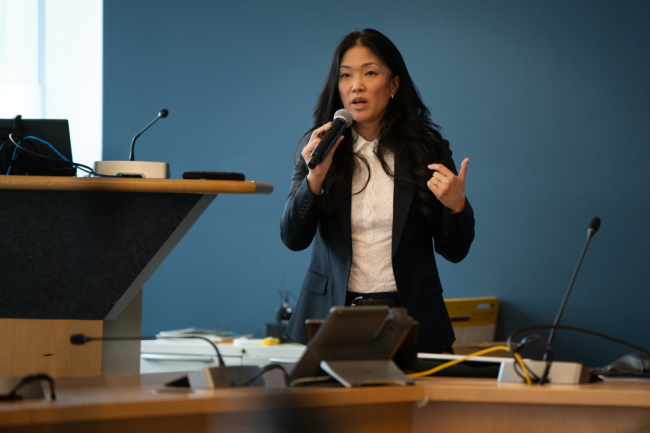
Dr Lawrence Yang, another family physician practising in Surrey, talked about the spectrum of childhood experience and how negative or positive experiences can create or mitigate trauma. He reinforced the need to gauge our own emotional responses first—akin to putting on our own oxygen mask on an airplane before assisting others.
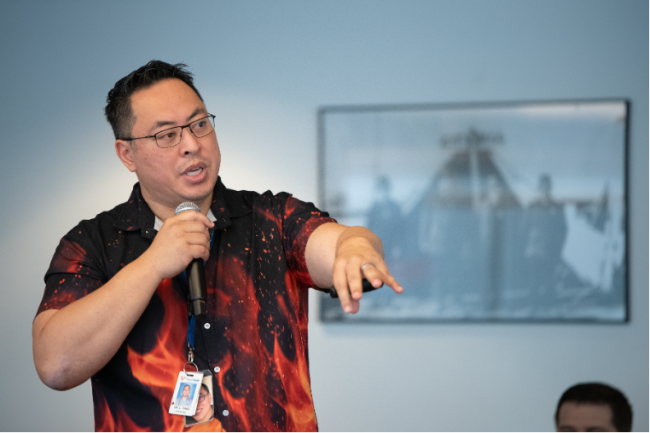
A police participant added, “As youth officers, one thing that drives us—sometimes to the point of burnout—is the fact that we know we may be the only positive touchpoint for that child or youth today.”
Trauma in crisis: a VPD case study
In his early days as a VPD negotiator, Sergeant Tim Rich was called out to a single-room occupancy (SRO) where a man armed with a knife was running around threatening himself and others. As he arrived at the scene, Sgt Rich recalls running through a mental checklist of his perceived biases and prejudices to reset his frame of mind.
“I tried to be conscious of these biases and take a step back; what is this person going through in this moment?” explains Sgt Rich.
Noting the man’s visible fear, Sgt Rich first asked other officers in his line of sight to step back and signalled that he was there to help, not to hurt.
Shattering the power differential and reminding people of their agency can make or break a critical situation, he stressed.
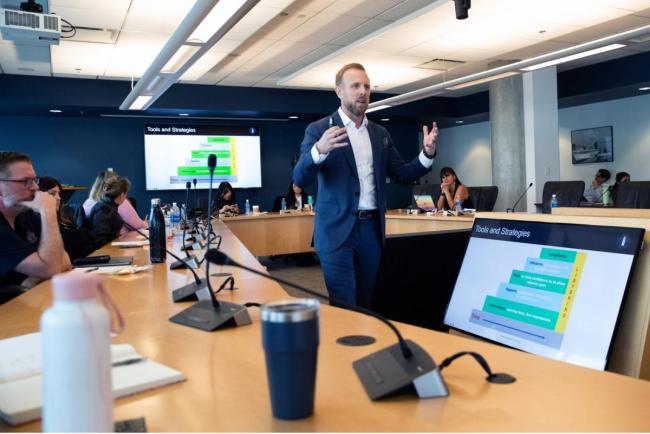
“Power and control imbalance can be huge,” explains Sgt Rich. “An opening line such as ‘Hey, it looks like you have a really big decision to make’ can have such a significant impact on the way the situation will go.”
He shared listening strategies and practical tools for de-escalating tense situations.
“Be a person who wants to understand another person; empathy instead of judgment or shame.”
An Indigenous lens to trauma-informed policing
Dr Terri Aldred, who is Dakelh (Carrier) from the Tl’Azt’En territory north of Fort St James, presented via video on the impacts of intergenerational trauma for Indigenous people. She emphasized that recognizing our own biases and personal pressures can help us be more aware of how our actions may be received by others.
She spoke about Indigenous teachings that recognize the interplay between an individual's health and the community's. Police officers, she noted, serve a crucial role in supporting and building the community. But doing so without compassion and sensitivity to others’ trauma can do more harm than good.
She encouraged officers to let their curiosity, rather than their preconceptions, lead the conversation.
“Learn about Indigenous brilliance and success as much as you learn about Indigenous suffering and trauma,” Dr Terri Aldred said, quoting Indigenous consultant and educator Len Pierre.
Practical approaches and strategies
Dr Jennifer Mervyn, a clinical psychologist and member of the Adverse Childhood Experiences Working Group, shared her experiences both as a psychologist and as someone whose loved ones have experienced the criminal justice system.
She reviewed practical ways to practise trauma-informed policing during interactions. Validation, using neutral language, and recognizing the person’s point of view—even if you disagree with it—can go a long way to establishing trust and helping co-regulate that person’s emotions, she said.
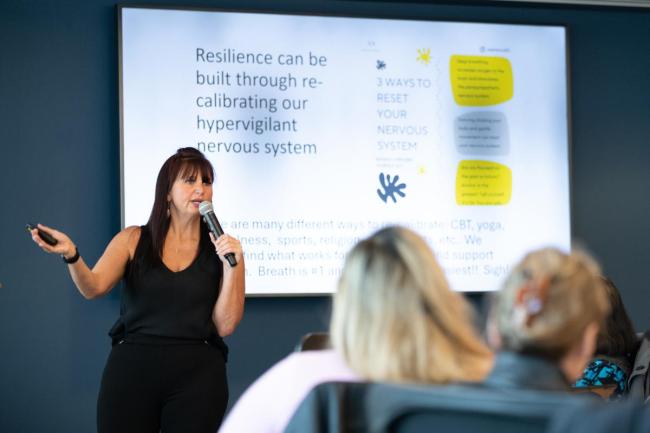
“If we don’t address the source of mental health and physical illness, even criminality, we are only applying Band-Aid solutions and not helping true healing take place,” explains Dr Mervyn.
Family physician Dr Rob Lehman, co-chair of the CoP’s steering committee, shared situational examples of how police can both self-regulate and co-regulate others’ emotions during a crisis. He implored officers to stay grounded, resist the natural inclination to match the other person’s intensity, and allow their own composure to help those in distress regain their calm.
What’s next
The Shared Care physicians hope to continue offering these workshops to police departments throughout BC, as well as to other emergency responders who frequently work with vulnerable populations, in line with their strategic priority of addressing gaps in pediatric mental health and substance-use care.
And police are finding value, with 82% of respondents indicating it helped them better understand and recognize trauma in individuals and apply strategies to buffer it.
“I learned a lot about myself,” a program participant said. “I thought I was pretty self-aware, but now I actually have some names for some of the things I feel and do.”
Another survey respondent noted the workshop helped them in “recognizing my own level of trauma and stress entering into specific situations and how to self-regulate.”